
Bird of Paradise Varieties:
One of the most common questions we receive at the nursery is about Bird of Paradise plants.
The confusion usually comes from the fact that several different plants are commonly called “Bird of Paradise,” even though they are different species with different growth habits and care requirements.
Below is a simple guide to help clear things up.
Clearing Up the Confusion
Pride of Barbados
Caesalpinia pulcherrima
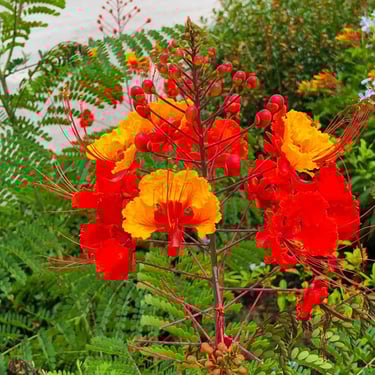
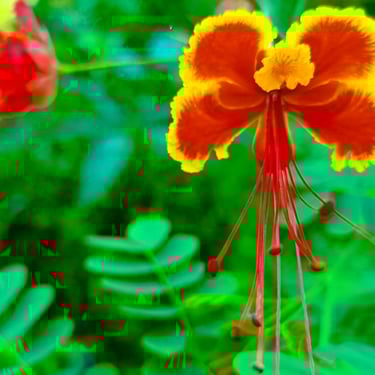
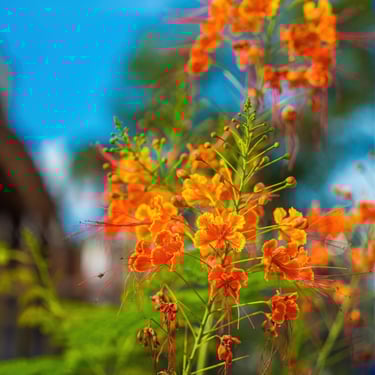
Zone: 8
Size: 5–10 feet
Type: Perennial shrub
This is the plant most people are looking for in the Concho Valley when they ask for Bird of Paradise. Pride of Barbados produces large, showy orange and red blooms that begin in mid-summer and continue until the first frost. The shrub has an open habit with attractive ferny foliage and makes a striking specimen plant in sunny landscapes.
In colder winters, this plant will die back to the ground, but it typically returns quickly once the soil warms in spring. Patience is important—new growth may not appear until mid to late May. After winter freezes, it should be cut back to the ground so it can regrow for the season.
Yellow Bird of Paradise
Caesalpinia gillesii

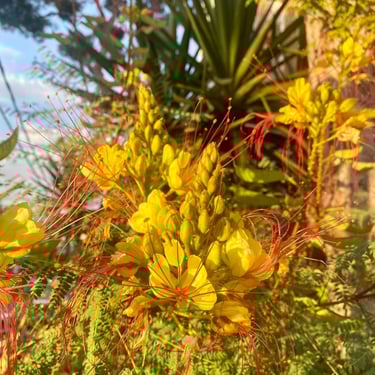

Yellow Bird of Paradise has a tropical appearance with delicate, bi-pinnate foliage. It produces bright yellow flowers with distinctive red stamens, which are very ornamental.
This plant typically blooms in the spring and may rebloom later after rainfall or cooler temperatures. It performs best with infrequent deep watering in well-drained soils.
Unlike Pride of Barbados, this variety can function as an understory tree, meaning you should not cut it back to the ground under normal conditions. The stems or trunks usually stay green year-round. It can be shaped or pruned as desired.
The only exception would be an extreme freeze, such as the 2021 winter storm, which froze branches back to the ground. In that situation, the plant can be cut back so it can regrow.
Zone: 8
Size: 5–10 feet
Type: Perennial shrub
Mexican Bird of Paradise
Caesalpinia mexicana

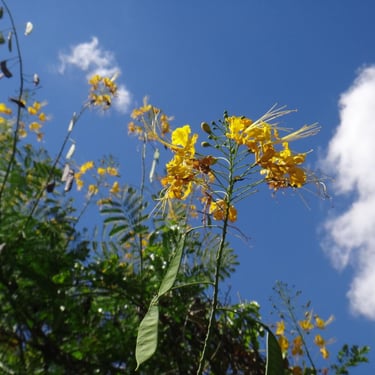
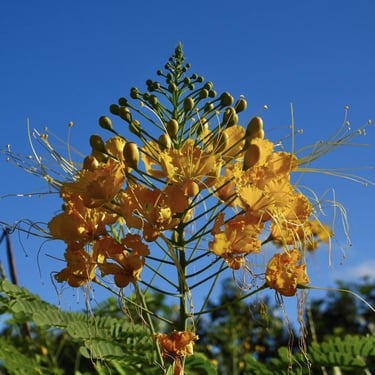
Mexican Bird of Paradise is a larger evergreen shrub or small tree known for its clusters of bright yellow blooms. Within its native range it remains evergreen, but in areas north of that range—like much of West Texas—it may become deciduous during colder winters.
This plant is very heat tolerant, thrives in reflected heat, and requires minimal water once established. It should be trimmed like a small tree rather than cut back to the ground.
As with the other varieties, the only time you would cut it back severely is after a major freeze that damages all branches.
Zone: 8
Size: 6-15 feet
Type: Large shrub or small tree
When someone asks for Bird of Paradise, they are usually referring to Pride of Barbados, the orange and red blooming shrub that thrives in our West Texas summers. Understanding the differences between these plants can help you select the right one for your landscape and care for it properly.
If you ever have questions about which variety is best for your yard, we are always happy to help at the nursery.
Final Tip
Concho Natives, LLC
Locally grown plants for West Texas landscapes.
Open Fridays and Saturdays 9am - 5pm
conchonatives@gmail.com
325-656-2884
© 2026. All rights reserved.
Follow us on Facebook
799 Abernathy Road
San Angelo, Texas 76905